Regulatory mandates
Global compliance standards, such as NIST IR 8547 guidelines, are mandating the phase-out of legacy public-key algorithms by 2030–2035.

Secure your data, communications, and business systems against quantum decryption risks with zero operational disruption.
The security foundation of modern internet from web traffic (TLS/HTTPS), APIs, identity systems, and enterprise data storage is fundamentally built on asymmetric cryptography. Current standards like RSA and elliptic-curve cryptography face obsolescence. Quantum computing rewrites the rules of digital defense, rendering these algorithms obsolete and trivial to bypass.
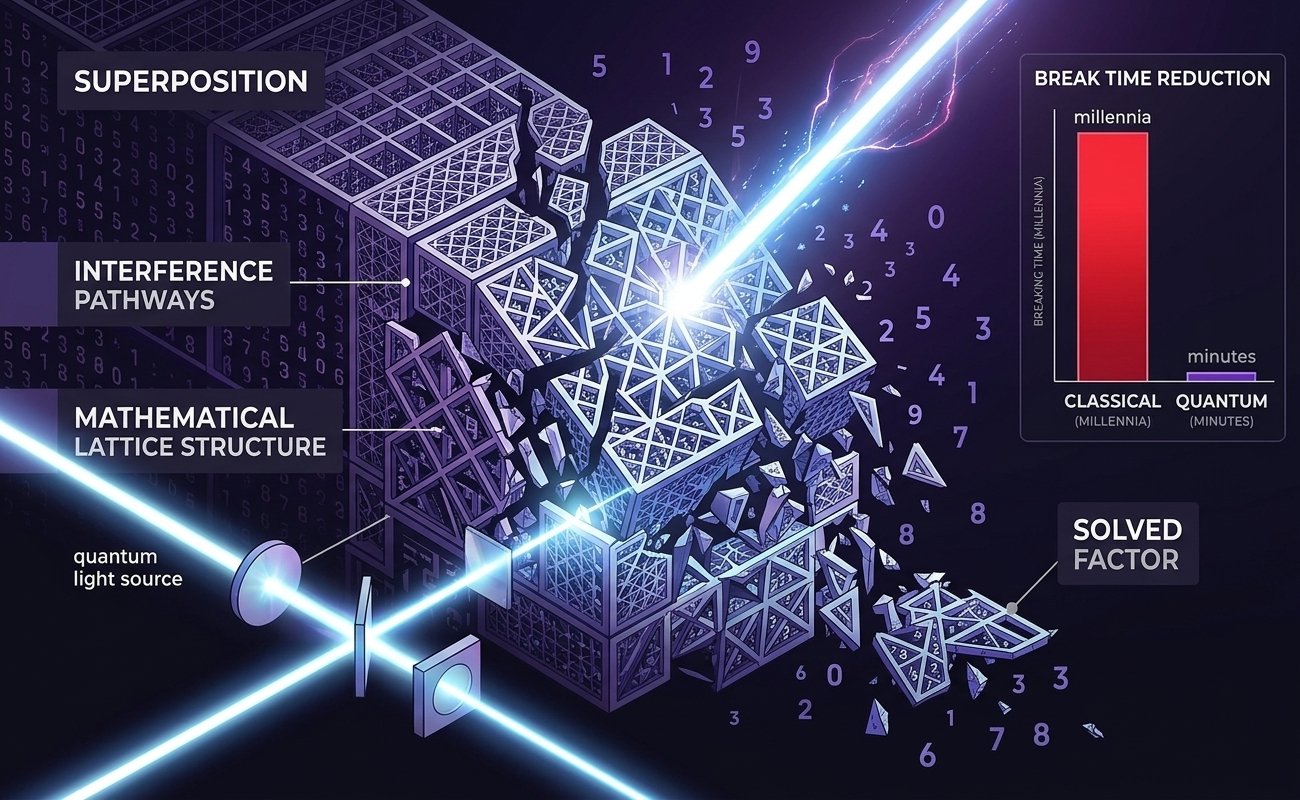
Shor’s Algorithm
Classical supercomputers would take thousands of years to factor massive prime numbers or calculate discrete logarithms. Quantum computers running Shor’s algorithm use superposition and interference to reduce that work to minutes. This compromises standard RSA, ECDH, and ECDSA key exchanges and digital signatures.
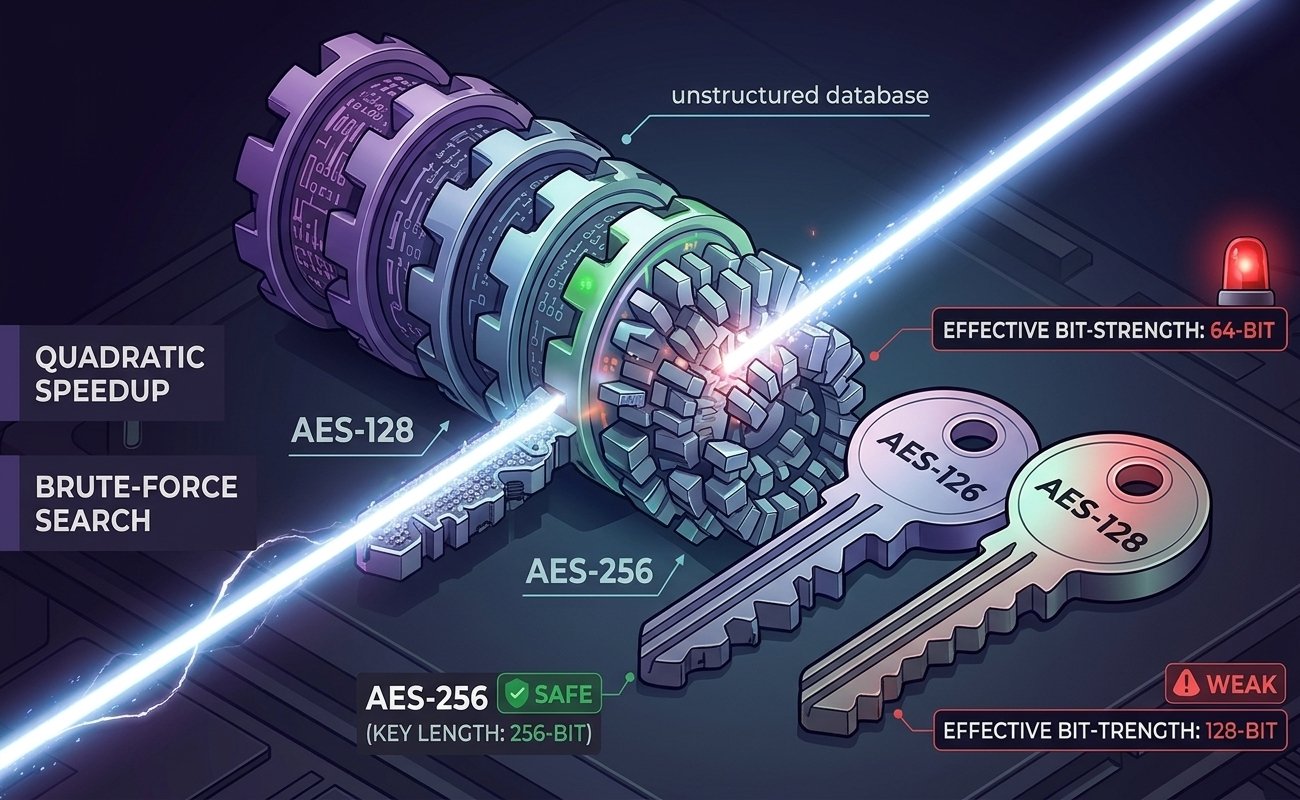
Grover’s Algorithm
Symmetric encryption such as AES is not broken by Shor’s algorithm, but Grover’s algorithm provides a quadratic speedup for unstructured search. That effectively reduces 128-bit key strength to 64-bit, making AES-256 mandatory to keep a 128-bit security margin.
The immediate threat
Adversaries and state-sponsored groups are passively recording and storing encrypted corporate communications, financial ledgers, and proprietary IP today. Once a cryptographically relevant quantum computer emerges, this stored data will be decrypted retroactively. If your data must remain confidential past 2030, your exposure is active right now.
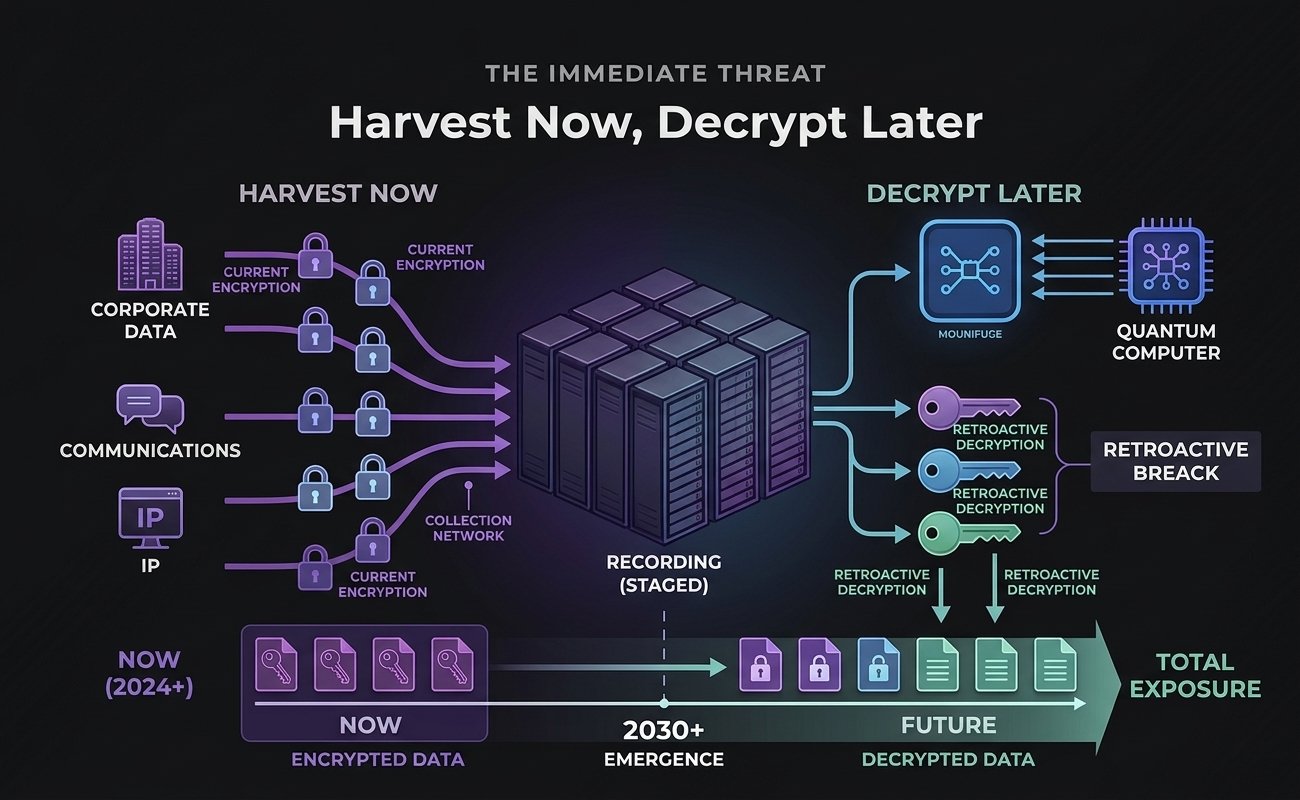
Transitioning global encryption infrastructure is a multi-year engineering undertaking. Systems deployed today that cannot easily adapt to new cryptographic primitives face severe operational risk.
Runway to the phase-out window
Runway to the phase-out window
Now
Oct 2026
2030
Phase-out window opens
2035
Legacy public-key phase-out ends
Time to inventory, decouple and migrate
2030 — Phase-out window opens
2035 — Legacy public-key phase-out ends
NIST IR 8547 phase-out window
Global compliance standards, such as NIST IR 8547 guidelines, are mandating the phase-out of legacy public-key algorithms by 2030–2035.
Sensitive IP, medical histories, trade secrets, and sovereign infrastructure credentials outlive the timeline of quantum hardware development.
Legacy microservices, hardcoded API gateways, and monolithic dependencies mean a single non-quantum-safe microservice compromises the whole enterprise security perimeter.
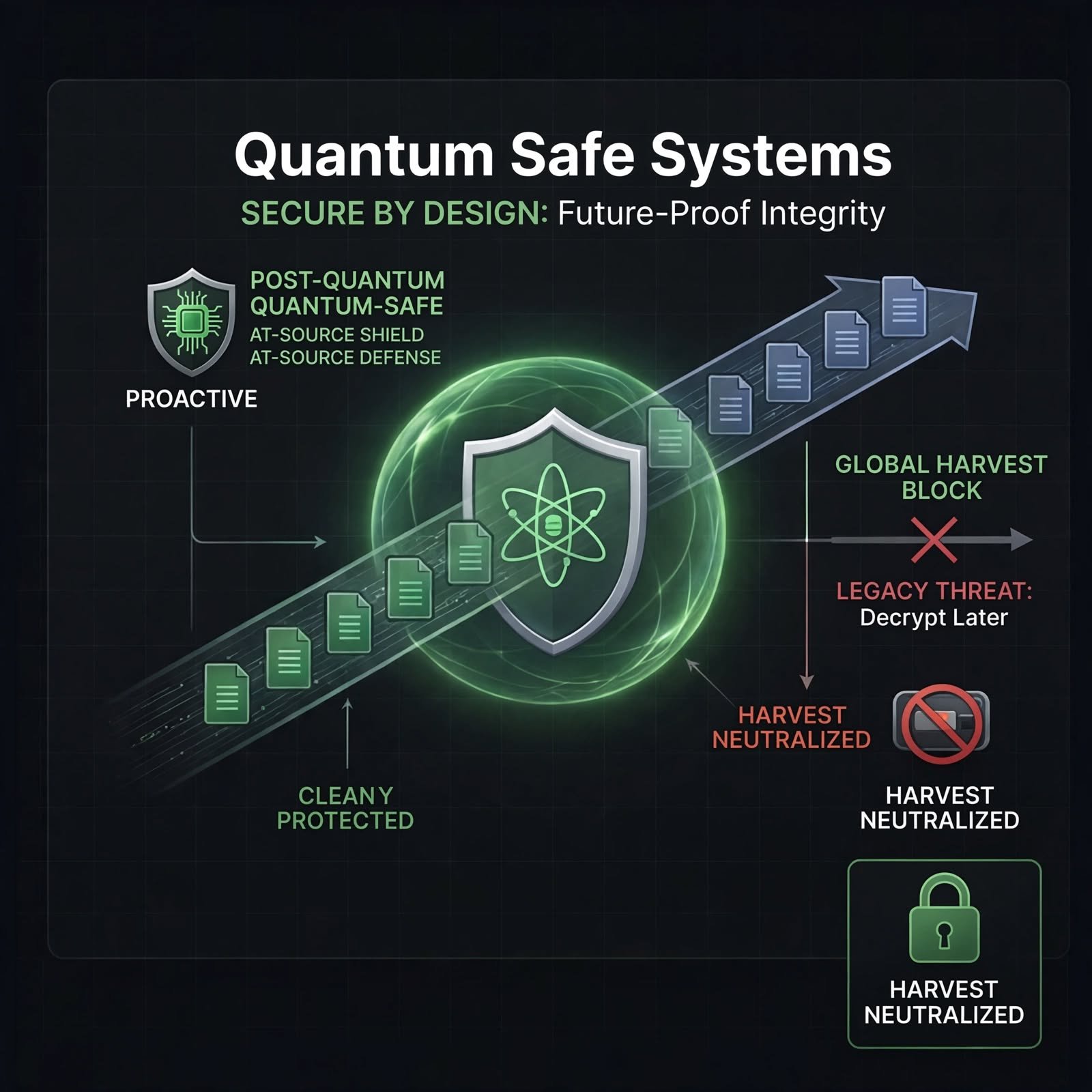
At QuantumTech.ONE we bridge theoretical physics and enterprise software architecture. Cryptography stays decoupled from business logic, and data is protected at rest, in transit, and through the key lifecycle.
A · Algorithmic defense
Shield your classical hardware with the latest quantum-safe cryptographic algorithms to protect against quantum threats.
ML-KEM
FIPS 203
Lattice-based key encapsulation
Secure key exchanges that replace RSA and ECDH across network sessions and API boundaries.
ML-DSA
FIPS 204
Lattice-based digital signatures
Authenticate identity, code signing, and document verification against quantum forgery.
SLH-DSA
FIPS 205
Hash-based digital signatures
A second signature family built on hash functions, so one mathematical assumption never carries everything.
B · Physics-based defense
Using Laws of Quantum Mechanics to secure data in transit with specialized hardware.
Eavesdropperstate altered, nodes alerted
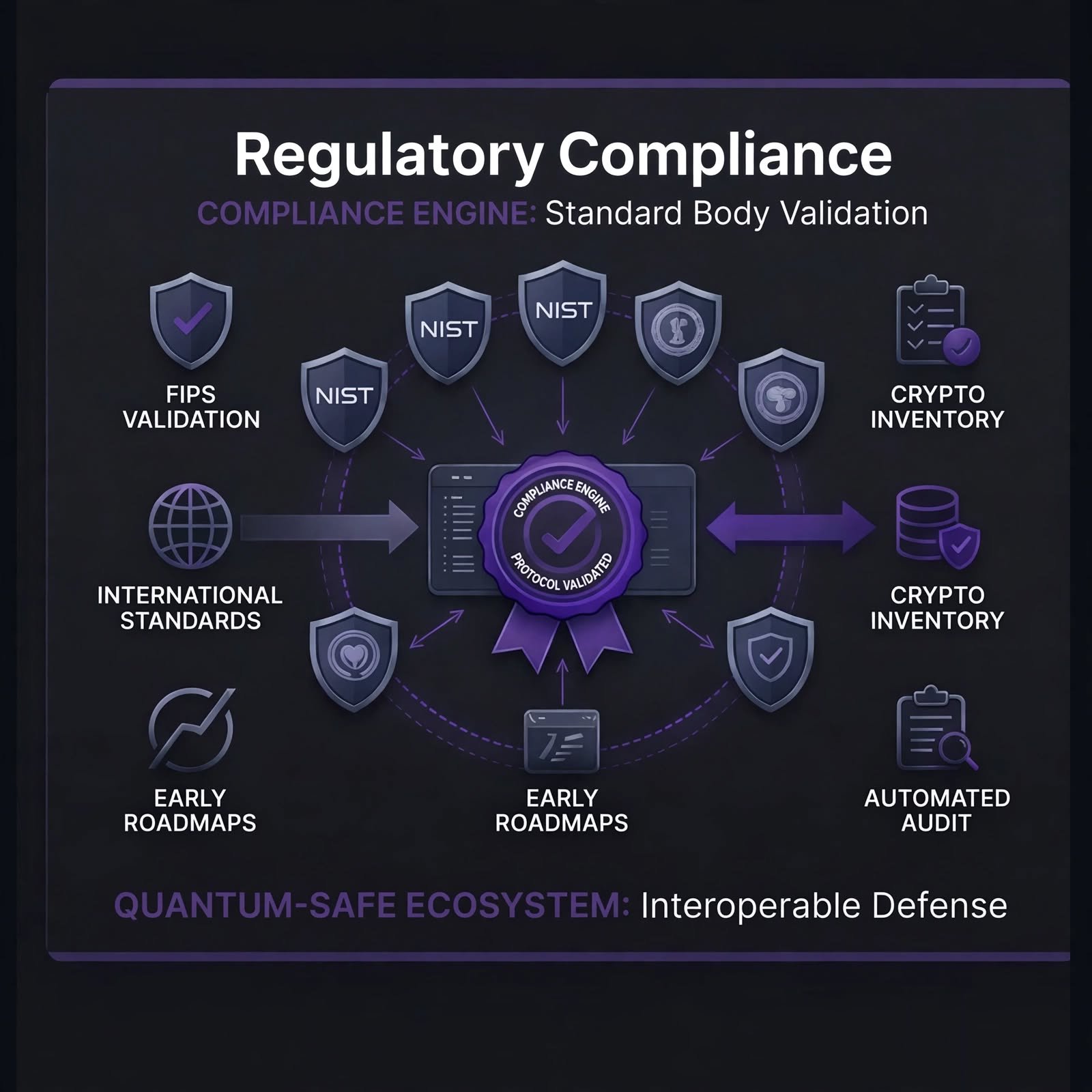
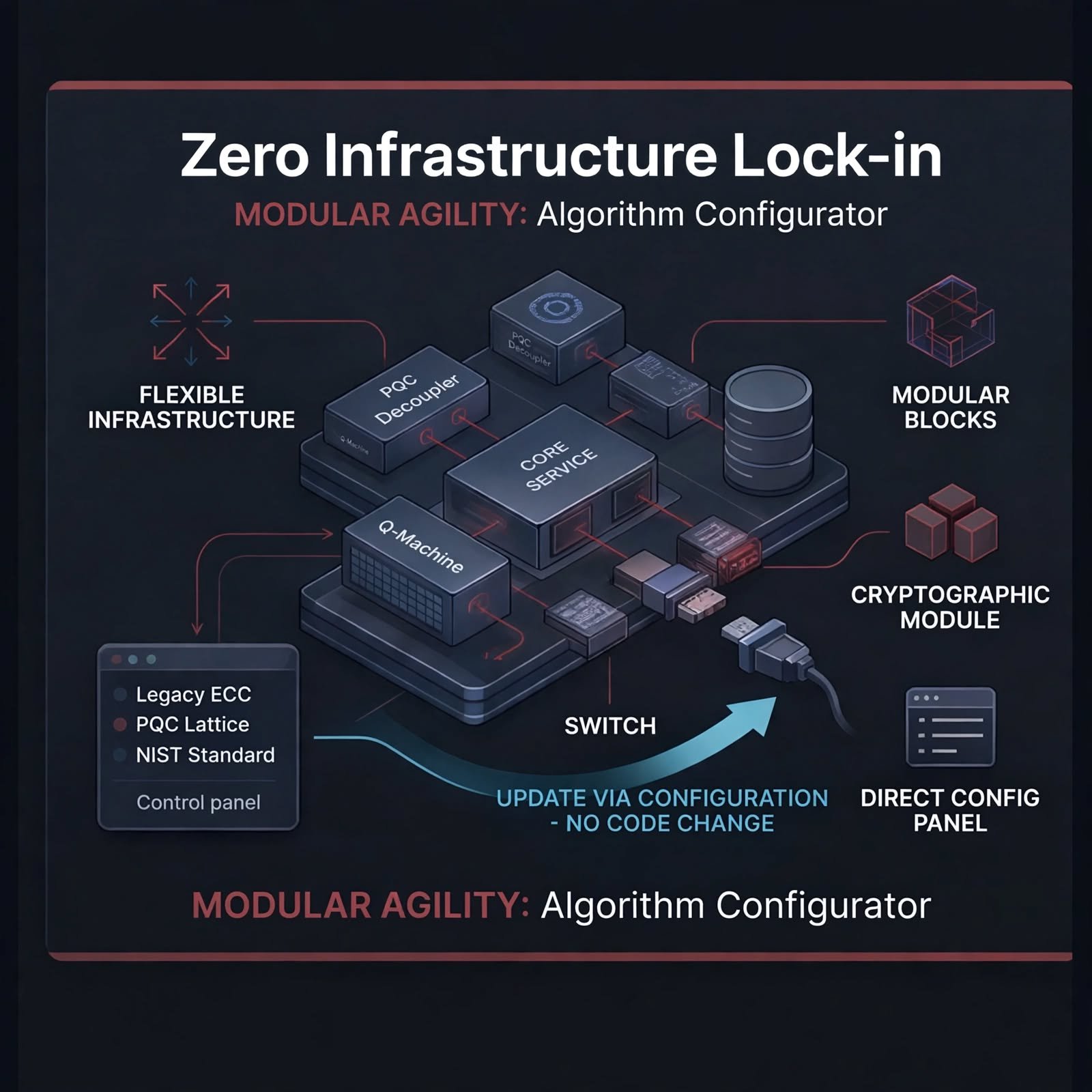
01
Harvest-risk assessment
Map data assets against retention windows to identify payloads vulnerable to harvest now, decrypt later.
Cryptographic SBOM creation
Scan codebases, databases, VPNs, and API gateways to catalog every active instance of RSA, ECC, and symmetric ciphers.
02
Cryptographic agility engineering
Refactor software so crypto dependencies sit behind unified, pluggable API layers.
Hybrid TLS and gateway migration
Deploy post-quantum key encapsulation across cloud ingress, service meshes, and enterprise VPNs.
03
Enterprise PQC implementation
Roll out NIST FIPS algorithms across authentication, code signing, and communication protocols.
QKD infrastructure planning
Design single-photon key exchange pathways for data-center interconnects and high-security financial pipelines.